ALL IN ONE
SOLUTIONS

Wind energy

Turn wind into reliable power.

Horizontal and vertical turbines for homes, farms, towers, and off-grid sites, specified beside rooftop solar. The model follows a wind study, not a guess.

400 W – 4.5 kW

Horizontal range, WE 400 to WE 4500/5000

300–500 W

Vertical WE-V, start-up at 2 m/s

15–20 years

Design life stated on the data sheet

From 3.1 m/s

Horizontal start-up on the lightest models

The range

A second source, beside solar.

All In One Solutions supplies small wind turbines where the roof is not enough, or where wind should sit next to solar. The range is built for reliable output and a long service life, with solar, hybrid, and off-grid systems.

A second source, beside solar

Specified where the roof is not enough, or where wind should sit next to an array.

Sized to the site

Homes, farms, towers, and off-grid loads. The model is chosen after a wind study.

Built to keep running

Furling in high wind, dump load, and a 15–20 year design life on the sheet.

Watched from off site

Remote monitoring is part of the power electronics, not an afterthought.
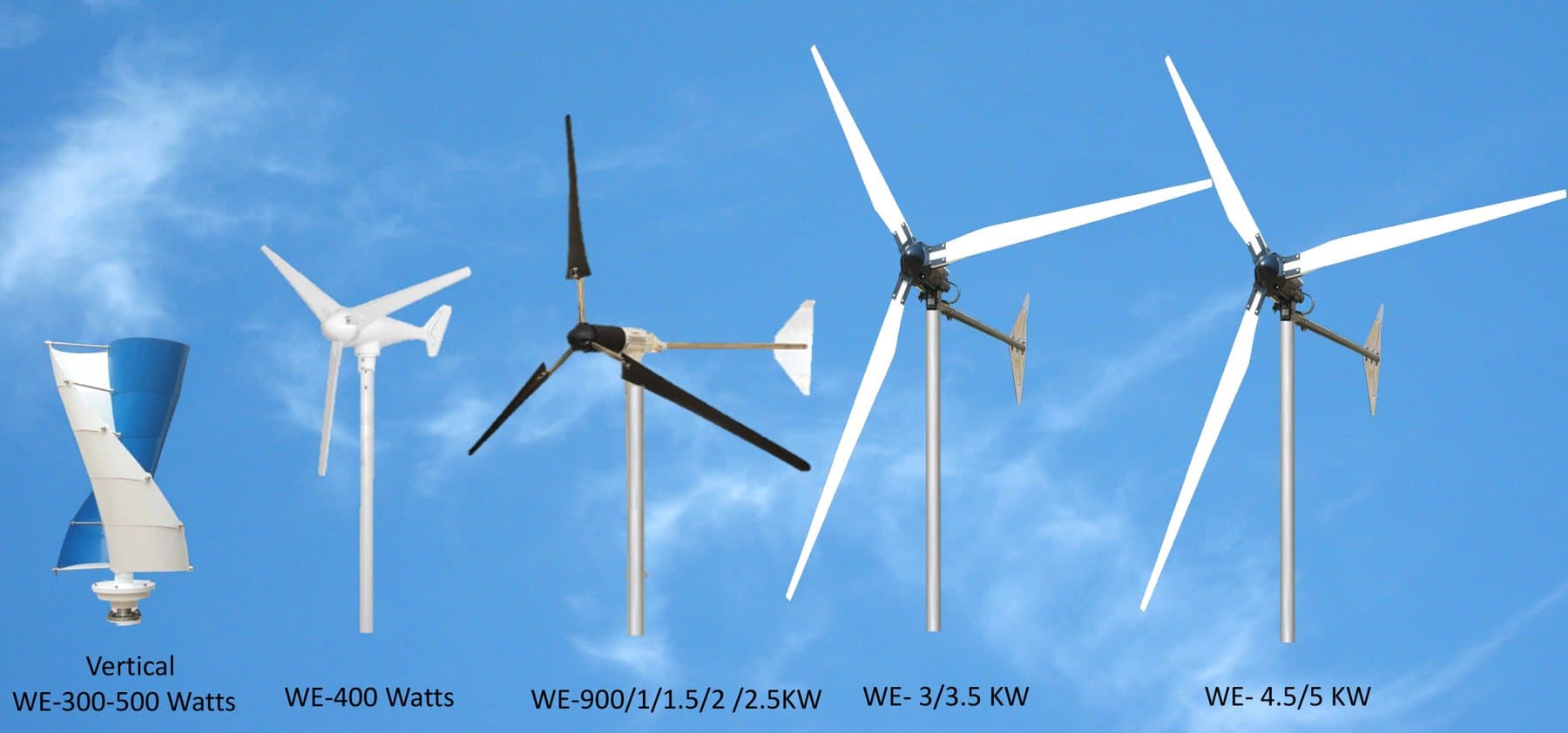
AIO small wind lineup from vertical 300 W to horizontal 4.5 kW

Why wind

Clean, reliable, sized to the load.

Efficient generation

The turbine turns wind into electricity.

Lower footprint

Less reliance on fossil fuel for the same load.

Cost over time

Long service life, with a stable energy cost.

Low maintenance

Bearings, fasteners, and coatings specified for a long run.

With solar or hybrid

Designed and installed beside rooftop PV, on-grid or off-grid.

Custom engineering

Tower, voltage, and controller follow the site, not a catalogue default.

Applications

Where a small turbine is used.

  1. 01Off-grid villages, resorts, hotels, and schools
  2. 02Street-light power
  3. 03Island electrification
  4. 04Lighthouses and sea-channel markers
  5. 05Offshore platforms
  6. 06Yachts and fishing boats
  7. 07Cathodic protection of pipelines
  8. 08Mobile and communication towers
  9. 09Off-grid water pumps
  10. 10Grid-tied turbines supplementing mains power

Lineup

Horizontal and vertical.

Horizontal from 400 W toward 5 kW. Vertical 300–500 W. The data sheet specifies WE 900 through WE 4500/5000. WE 400 W is in the lineup. The model is chosen after a site wind study.

300–500 W

Vertical WE-V

Compact. Wind from any direction. Rooftops and tight sites.

400 W

WE 400

Smallest horizontal in the lineup.

900–2,500 W

WE 900 to 2.5 kW

Cast aluminium marine body, 2.5 in mount.

3,000 / 3,500 W

WE 3 / 3.5 kW

Larger rotor, 5 in mount, 75 kg.

4,500 W rated

WE 4.5 / 5 kW

High-power PMG. Cut-out at 18 m/s.

Data sheet

Every figure on the horizontal sheet.

Pick a model. Rated power, rotor, start-up, and voltage are the sheet values, not rounded marketing numbers.

Horizontal

WE 900

900 W

Rotor
2.23 m
Swept area
3.9 m²
Body
Cast aluminium, marine
Mount
2.5 in
Weight
30 kg
Start-up
3.4 m/s
Cut-out
16 m/s
Alternator
Brushless PMG
Voltage
12, 24, 48, 96, 120, 240 V
  • Rated power is at 12.5 m/s.
  • Three blades, clockwise, upwind, on every model.
  • Overspeed protection is furling plus a dump load.
  • Wind direction by tail fin and tail boom. Yaw is free / passive.

Special features

Mechanical, electrical, blades.

Mechanical and alternator

  • Rare-earth NdFeB permanent-magnet generator
  • 15–20 year design life
  • H-class copper, dual coat, varnish to 180 °C
  • Powder coat to ASTM B117
  • Furling in high wind
  • Bearings by SKF or Nachi
  • Stainless fasteners, SS304 / 316
  • Start-up from 3.1 m/s

Power electronics

  • MPPT for wind
  • Dump load for battery and turbine
  • Protection against overheating
  • Remote monitoring for the site

Blade design

  • Carbon-fibre blades, tested to a 200 kg load
  • Injection-moulded PP with glass fibre

Vertical

WE-V, 300–500 W.

Compact, for rooftops and tight sites. Temperature is not stated on the data sheet.

  • Low-start coreless 3-phase alternator
  • Light, with a marine coat
  • Straightforward installation
  • Wind from any direction
  • Compact, for urban sites
  • Easy maintenance
  • Smaller power output
Axis
Vertical
Start-up wind
2 m/s
Rated wind
13 m/s
Survival wind
45 m/s
Rotation
Clockwise, looking at it
Wheel diameter
900 mm
Height
960 mm
Blades
12, aluminium alloy
Weight
17 kg
Voltage
12 / 24 / 48 V
Controller
Electromagnetic
Regulation
Automatically to windward
Generator
Permanent-magnet, 3-phase
Hub
Mount 200 mm, wheel 470 mm

Schematic

On-grid and off-grid.

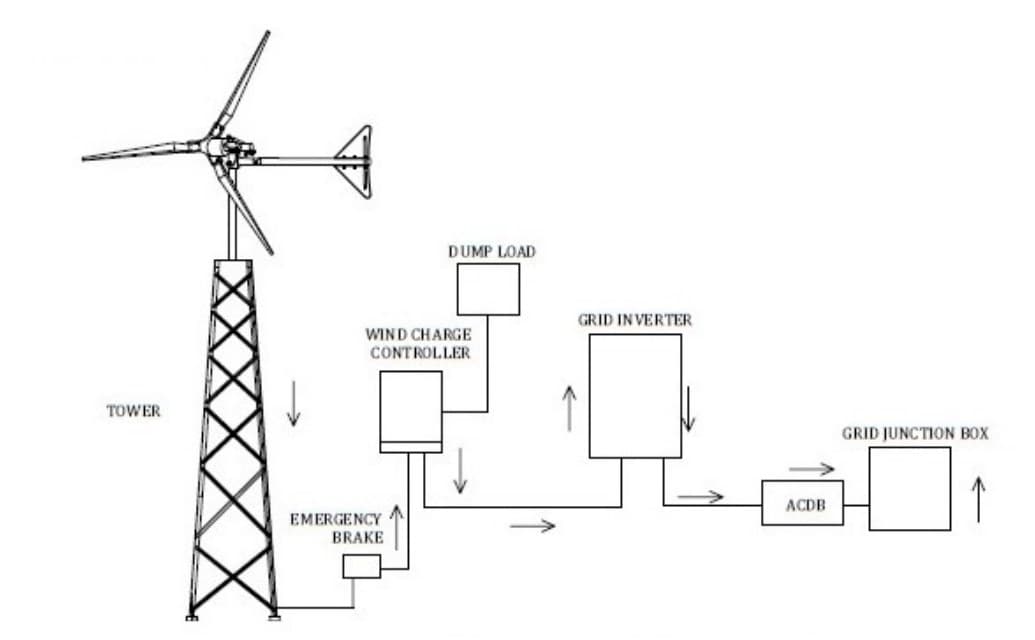
On-grid small wind schematic: tower, charge controller, dump load, grid inverter, and junction box

On-grid

Turbine on the tower, wind charge controller, grid inverter, dump load, AC board, then the grid.
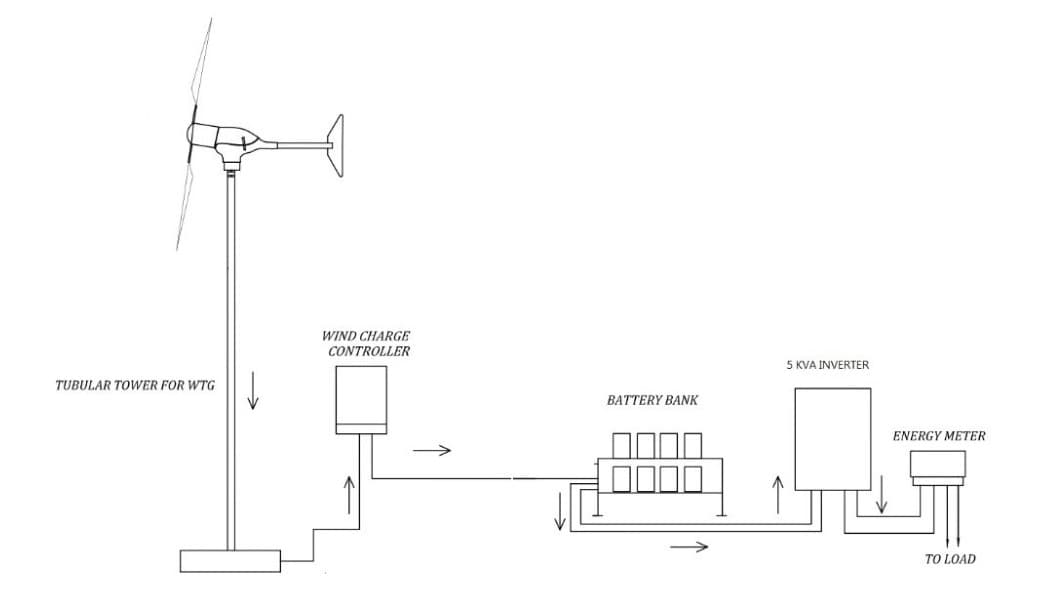
Off-grid small wind schematic: tubular tower, charge controller, battery bank, and inverter

Off-grid

Turbine, controller, battery bank, inverter, then the AC load. This arrangement has no grid.

Installations

Turbines on real sites.

Horizontal machines on towers, vertical units beside buildings, and small turbines paired with solar.
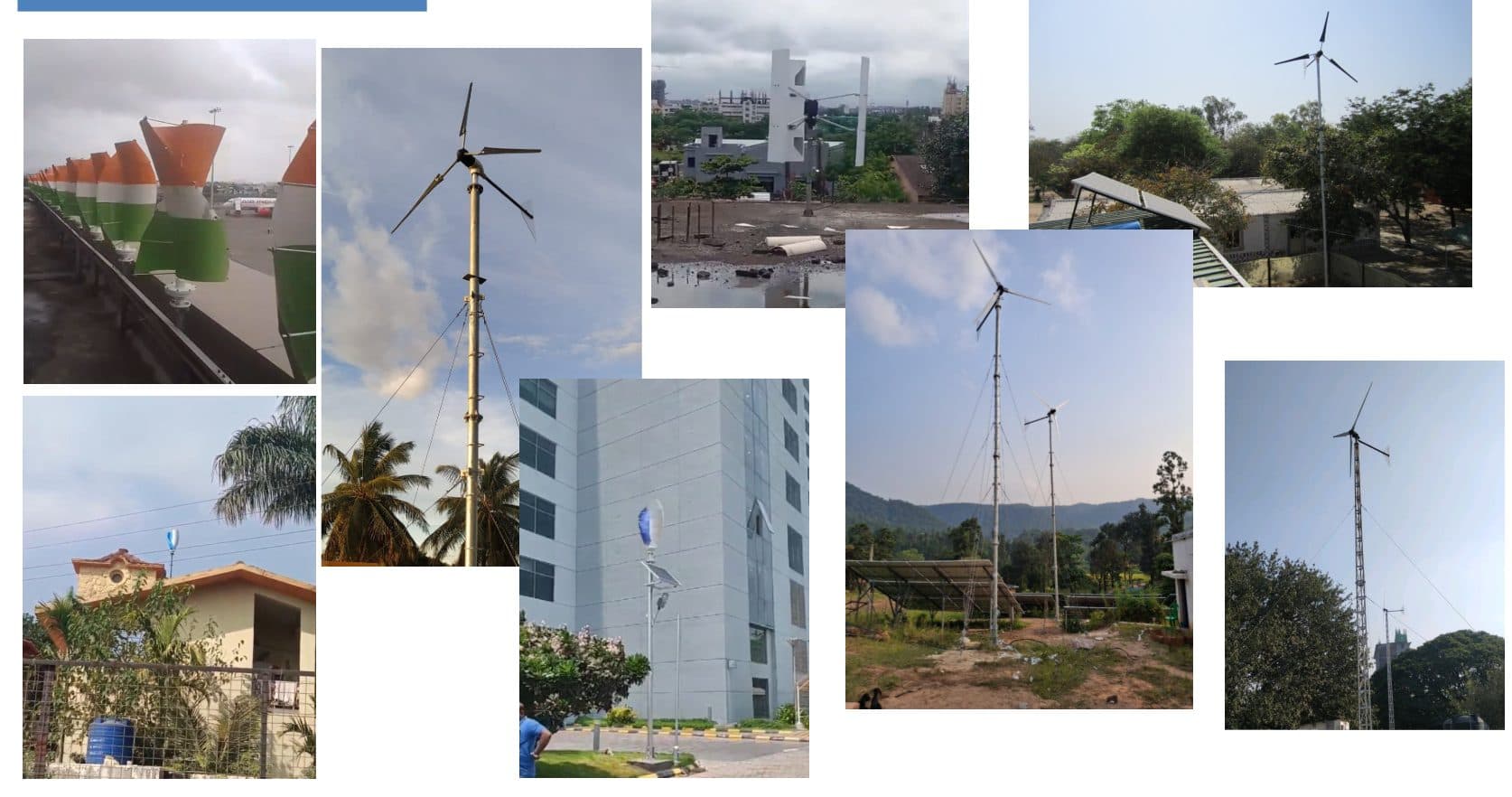
Collage of installed small wind turbines on towers, rooftops, and solar sites

Research

H-type vertical, in development.

A new vertical-axis turbine, for higher use of the wind. No ratings until trials finish. Photographs show the prototype indoors and on an outdoor test stand. This is development, not a model on the current order sheet.
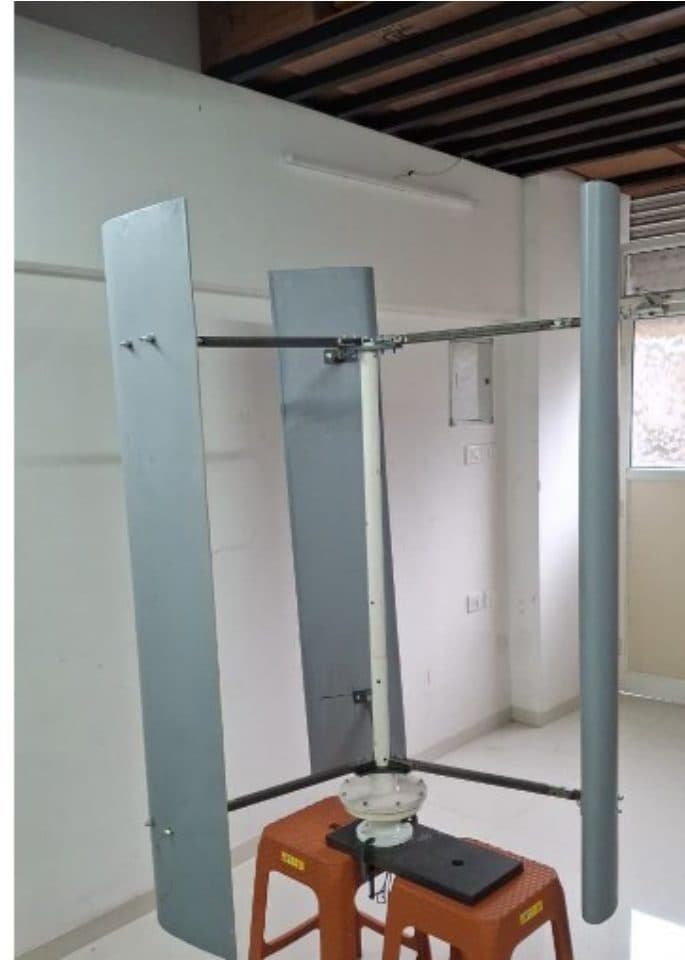
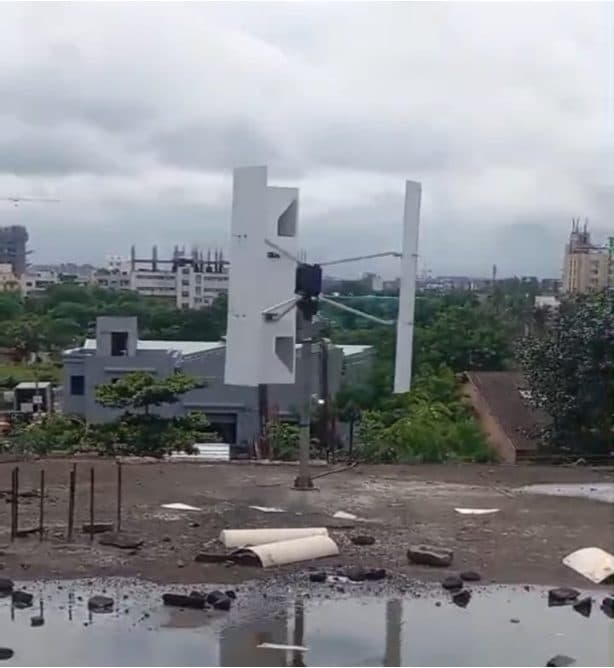
H-type vertical turbine prototype assembled indoors
H-type vertical turbine prototype on an outdoor test stand

Also in the range

Artificial wind tunnels.

A tunnel for testing a turbine in controlled wind. Used to study output, efficiency, and aerodynamic behaviour before a model is specified for a site.
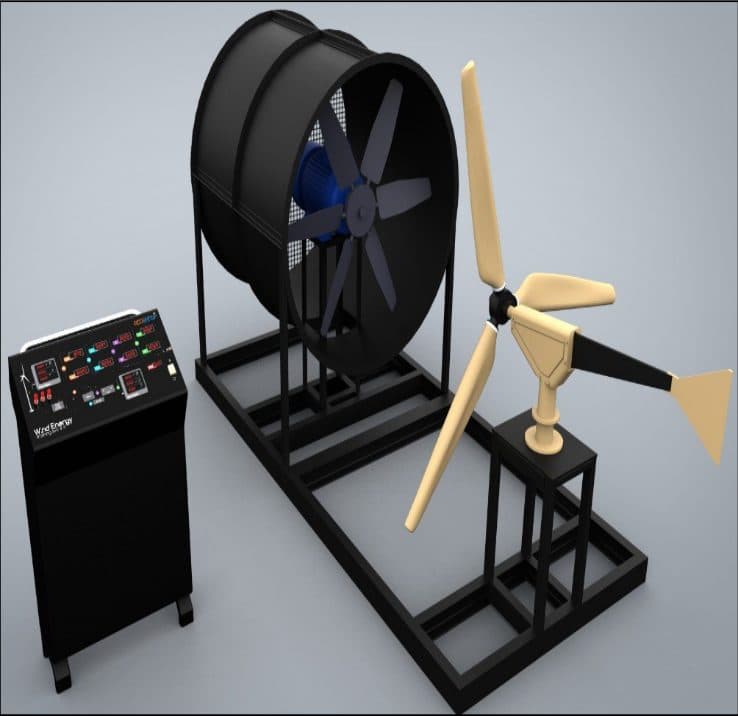
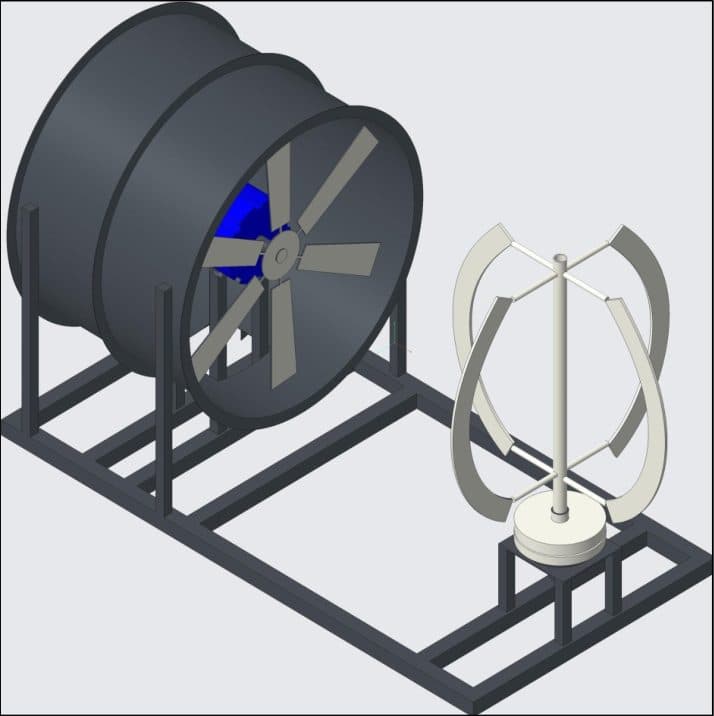
Wind tunnel test rig with a horizontal turbine
Horizontal turbine in the tunnel
Wind tunnel test rig with a vertical turbine
Vertical turbine in the tunnel

Site wind study

The model is chosen after the wind is known.

Call +91 97316 32207 or +91 98456 91278. We survey the site, then specify horizontal or vertical against the load and the solar design.

Book a wind study